
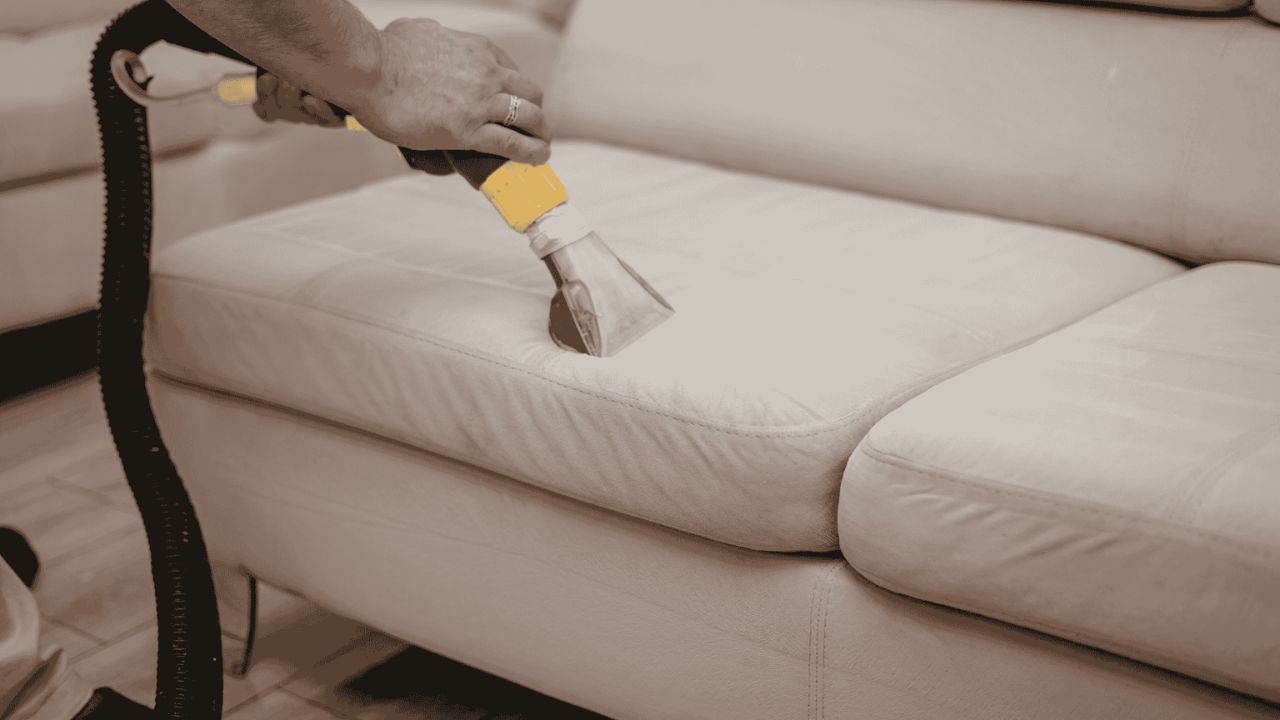
The honest answer? You can deep clean your sofa yourself — but there’s a big difference between “clean enough” and genuinely clean. Here’s a complete guide to both methods: the manual DIY process you can do at home today, and the professional upholstery cleaning process that removes what scrubbing alone can’t reach.
TL;DR
- Your sofa collects dead skin cells, dust mites, food particles, sweat, and bacteria every single day.
- The DIY method uses fabric conditioner, a sponge, and sunlight — it works, but it’s labor-intensive and limited on deep stains.
- The professional method uses an extractor, quick-dry solution, stain remover, steam, and an industrial dryer — faster, deeper, and fully sanitized.
- DIY supplies cost roughly ₱500–₱1,500. Professional sofa cleaning starts at ₱750 for a single-seater plus a base fee.
- For fabric sofas with stains, odors, or it’s been 6+ months since the last clean — go professional.
Why Your Sofa Needs a Deep Clean
(Not Just a Wipe-Down)
Your sofa is probably one of the dirtiest pieces of furniture in your home — and it rarely looks it.
Think about what happens on it every day: people sit, nap, eat, sweat, let their pets curl up, and occasionally spill drinks. All of that works its way into the fabric fibers. A quick vacuum or surface wipe doesn’t reach the oils, bacteria, and allergens living deeper in the cushions.
📊 Stat Block According to a study by the Asthma and Allergy Foundation of America, upholstered furniture is one of the top three breeding grounds for dust mites in the home — each square meter of fabric can harbor up to 100,000 mites. In the Philippines' humid climate, where indoor humidity regularly exceeds 70%, conditions for mite growth are near-perfect year-round.
If someone in your household has allergies, asthma, or sensitive skin — or if your sofa has visible stains, a musty smell, or just hasn’t been properly cleaned in months — it’s time for a real deep clean.
Know Your Sofa Material First
Before you touch anything, check the cleaning tag sewn into your sofa cushion or frame. It tells you what’s safe:
- W — Water-based cleaners only (most fabric sofas)
- S — Solvent-based cleaners only (some microfiber and suede)
- W/S — Either is fine
- X — Vacuum only; no liquid cleaners at all
Using the wrong cleaner on the wrong material can cause permanent staining, shrinkage, or discoloration. When in doubt — especially with leather or suede — call a professional.
📊 Stat Block A 2022 consumer survey in Southeast Asia found that 43% of homeowners admitted to having never professionally cleaned their sofa — and 61% said they didn't know their sofa had a care label. Cleaning the wrong material the wrong way is one of the most common reasons for permanent upholstery damage.
Method 1: The DIY Manual Deep Clean
Best for: Lightly soiled fabric sofas, regular maintenance, budget-conscious households What it takes: About 2–4 hours, physical effort, and a sunny day
This method works. It won’t match the depth of a professional clean, but for a sofa that’s reasonably well-maintained, it freshens things up nicely.
What You’ll Need:
| Item | Estimated Cost |
|---|---|
| Fabric conditioner (e.g. Downy or Surf) | ₱50–₱120 |
| Soft-bristle scrubbing brush | ₱80–₱200 |
| Sponge or microfiber cloths (x3) | ₱80–₱200 |
| Small bucket | ₱80–₱150 |
| Spray bottle | ₱50–₱100 |
| Upholstery stain remover spray (optional) | ₱150–₱350 |
| Total estimated cost | ₱490–₱1,120 |
Most of these you probably already have at home.
Step-by-Step: DIY Sofa Deep Clean
Step 1: Vacuum the entire sofa first.
Get into the seams, under the cushions, and along the back. This removes loose dust, crumbs, and pet hair before you introduce any moisture.
Step 2: Mix your cleaning solution.
In a bucket, combine warm water with a small amount of fabric conditioner — about 1 tablespoon per liter of water. This lifts dirt and leaves the fabric smelling fresh. Do not oversaturate.
Step 3: Scrub & shampoo the sofa and throw pillows.
Dip your brush into the solution and scrub the sofa surface in small circular motions. Work section by section — arms, backrest, seat cushions, sides. Include your throw pillows if they’re fabric. Apply a bit more pressure on visibly soiled areas.
Step 4: Scrub off the soap using a clean sponge or damp microfiber cloth.
Go over every section you shampooed, wiping away the soap residue. Rinse your sponge or cloth frequently. You want to remove the suds, not just spread them around.
Step 5: Dry the sofa and pillows under the sun.
Move removable cushions outside and prop them up so air circulates around all sides. Leave the sofa near an open window or in a ventilated area. Full drying can take 3–6 hours depending on humidity. Do not use the sofa while damp — sitting on wet foam cushions compresses moisture deeper into the filling and can cause mold.
⚠️ Not recommended for: Leather, suede, or W/S-tagged sofas. The DIY water-and-conditioner method can dry out leather, cause water stains on suede, and damage solvent-only fabrics. For these materials, skip to the professional method below.
📊 Stat Block The Philippine Atmospheric, Geophysical and Astronomical Services Administration (PAGASA) reports average indoor humidity in Metro Manila ranges from 72–85% during the rainy season (June–November). Furniture that doesn't dry completely within 6–8 hours in this climate is at real risk of developing mold and mildew — a key reason why proper drying after any wet cleaning is critical.
Best for: All sofa types, deep stains, odors, post-renovation, allergy sufferers, leather & suede What it takes: 45–90 minutes on-site; sofa is dry and usable within a few hours
This is what actually gets a sofa clean — not just presentable. The professional process uses commercial-grade equipment that the DIY method simply can’t replicate.
The Equipment Used:
| Equipment | What It Does |
|---|---|
| Spray extractor (Kärcher Puzzi 10/1) | Injects cleaning solution deep into the fibers and vacuums it back out — removing dirt, bacteria, and moisture in one pass. |
| Stain removal solution | Professional-grade formulation that breaks down oil, food, sweat, and organic stains. |
| Steam cleaner (Kärcher SG 4/4) | High-temperature steam (up to 155°C) kills bacteria, dust mites, and allergens without chemical residue. |
| Industrial air dryer | Accelerates drying so the sofa is ready to use in 2–3 hours instead of all day. |
Step-by-Step: Professional Upholstery Cleaning
Step 1: Wet and shampoo the entire sofa using the extractor.
The spray extractor injects a quick-dry cleaning solution deep into the fabric at controlled pressure, agitating and lifting embedded dirt from within the fibers — not just the surface. Throw pillows and cushions are cleaned in the same pass.
Step 2: Scrub out deep stains using a stain removal solution.
Targeted stains (grease, coffee, ink, pet accidents) are pre-treated with a professional stain remover. A technician works the solution into the stain before extraction — this is the step that actually removes set-in marks rather than just fading them.
Step 3: Extract all the liquid using the extractor.
The machine vacuums out the injected solution, along with everything it loosened: dirt, oils, allergens, dead skin cells, bacteria. This is what makes professional cleaning fundamentally different from the DIY method — you’re not just pushing moisture around, you’re pulling it out.
Step 4: Steam the entire surface of the sofa for disinfection.
A steam cleaner passes over the full surface at high temperature, killing dust mites, bacteria, and mold spores that the extraction missed. This step is especially important for households with young children, pets, or allergy sufferers.
Step 5: Dry the sofa using an industrial dryer.
A high-powered air dryer reduces drying time to 2–3 hours. No waiting for a sunny day, no damp-sofa-smell risk, no mold from slow drying in humid conditions.
How Much Does Professional Sofa Cleaning
Cost on Average?
Here’s the honest pricing breakdown:
| Sofa Type | Average Price |
|---|---|
| 1-Seater sofa | ₱750 |
| 2–3 Seater sofa | ₱1,000 |
| 4+ Seater sofa | ₱1,250 |
| Office chair | ₱250 |
| Single mattress (add-on) | ₱1,000 |
| Queen mattress (add-on) | ₱1,500 |
| King mattress (add-on) | ₱2,000 |
Compare that to the cost of replacing a sofa — entry-level fabric sofas in the Philippines start at ₱8,000–₱15,000. A yearly professional clean at ₱1,000 is a fraction of the cost of a replacement.
📊 Stat Block According to Statista's 2023 Southeast Asia Consumer Insight report, Filipino households spend an average of ₱12,000–₱18,000 on sofa purchases every 5–7 years. Regular professional upholstery cleaning — done once or twice a year — can extend a sofa's lifespan by 3–5 years, making it one of the highest-ROI home maintenance habits you can build.
DIY vs. Professional: Which Should You Choose?
| DIY Manual Clean | Professional Clean | |
|---|---|---|
| Cost | ₱490–₱1,120 (supplies) | ₱750–₱1,250 per sofa |
| Time | 2–4 hours + drying day | 45–90 mins + 2–3 hrs drying |
| Stain removal | Surface-level | Deep fiber extraction |
| Disinfection | Minimal | Full steam disinfection |
| Safe for leather/suede | No | Yes |
| Drying risk in rainy season | High | Low (industrial dryer) |
| Equipment needed | Basic household items | Commercial-grade machines |
Choose DIY if: Your sofa is lightly used, fabric-only, and you’re doing a routine refresh.
Choose professional if: There are visible stains, it’s been 6+ months, you have a leather or suede sofa, someone in the house has allergies, or you just want it actually clean — not just cleaner.
Frequently Asked Questions
How often should I deep clean my sofa in the Philippines?
For most Filipino households, every 3–6 months is ideal. The combination of heat, humidity, and the typical Filipino lifestyle (eating in the living room, kids and pets on the sofa) means upholstery collects grime faster here than in drier climates. If you have pets or allergy sufferers at home, quarterly cleaning is the better choice. At minimum, do a proper deep clean once a year — not just a vacuum.
Can I use fabric conditioner to clean my sofa?
Yes — fabric conditioner diluted in warm water is one of the gentler DIY cleaning solutions for fabric sofas. It lifts light surface grime and leaves the fabric smelling fresh. However, it doesn’t disinfect, won’t remove set-in stains, and is not safe for leather or suede. It’s a solid maintenance clean, not a substitute for a full deep clean with proper equipment.
How long does a professionally cleaned sofa take to dry?
With a professional service using an industrial dryer, most sofas are dry and usable within 2–3 hours after cleaning. A DIY clean using water-based solutions can take anywhere from 4–8 hours depending on humidity — which is why sunny, breezy weather is important. Never sit on a damp sofa: compressed wet foam causes mold growth inside the cushion filling.
Is professional sofa cleaning safe for kids and pets?
Yes — at Tita Kleans, we use eco-friendly, pet-safe cleaning solutions and a quick-dry formula that leaves no harmful chemical residue in the fabric. The steam disinfection step actually makes the sofa safer for kids and pets by eliminating bacteria and dust mites without any chemical spray. If your household includes young children or pets, professional cleaning is actually the gentler choice compared to store-bought chemical sprays.
Whether you want to try the DIY method first or skip straight to a professional result, the important thing is that you clean it — a sofa that gets regular attention lasts longer, looks better, and is genuinely healthier for everyone who uses it.
👉 Get a free quote from Tita Kleans → We serve residential and commercial clients across Metro Manila and nearby areas. Message us to schedule your upholstery cleaning session. We also offer post construction cleaning services in Metro Manila.
About the Author
Paolo T. is a Filipino entrepreneur who offers residential and commercial cleaning company based in the Philippines. Our team specializes in professional upholstery cleaning, deep cleaning, post-construction cleanup, and recurring home maintenance — using commercial-grade Kärcher equipment and eco-friendly, pet-safe solutions. We’ve helped hundreds of households and small businesses get their spaces genuinely clean, not just presentable.
Other Resources: